
Payment facilitators can now offer crypto conversion without becoming a licensed exchange. A payment facilitator (payfac) processes credit card transactions for sub‑merchants. Adding crypto conversion used to require a money transmitter license in every US state. That barrier stopped most payfacs. Now, specialist platforms handle the regulated part.
The payfac integrates an API. Customers pay with fiat. The platform sends stablecoins to the payfac’s crypto wallet. No license headache. No building exchange infrastructure from scratch. Below are six facilitators that turn fiat into stablecoins instantly. Each serves a different type of business. Some hold global registrations. Others focus on developer experience or regional payment methods.
1. Paybis
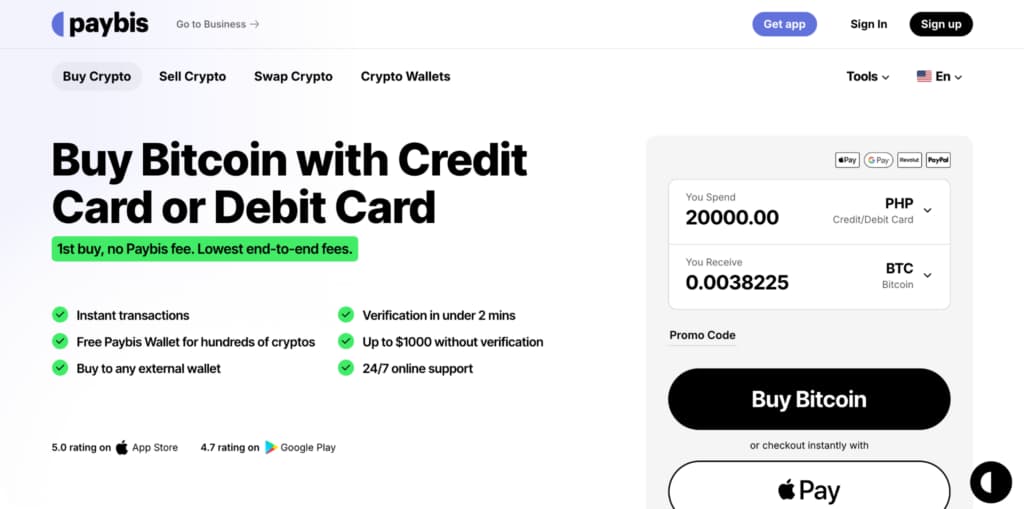
Paybis provides a ramp designed specifically for payment facilitators. The platform instantly converts customer fiat payments into stablecoins like USDC or USDT. The payfac never touches crypto unless it wants to. Funds move from the customer’s card or bank account to the payfac’s crypto wallet in minutes.
Regulatory Ready
Paybis holds registrations with FinCEN in the United States, FINTRAC in Canada, and multiple VASP licenses across Europe. A payment facilitator using this ramp inherits none of that compliance burden. The platform runs all KYC, AML, and transaction monitoring. The payfac simply integrates the API and collects stablecoin payouts.
What the white‑label integration includes:
- Fully branded checkout flow
- Instant fiat‑to‑stablecoin conversion
- Settlement to any crypto wallet address
- Webhook notifications for transaction status
Integration for Existing Payfacs
A payment facilitator already processing credit cards can add the Paybis ramp as an extra service. Sub‑merchants get a toggle: accept fiat as usual or receive stablecoins instead. The integration takes days, not months. Existing PCI compliance and fraud tools remain in place. Paybis handles the crypto side separately.
2. TransFi
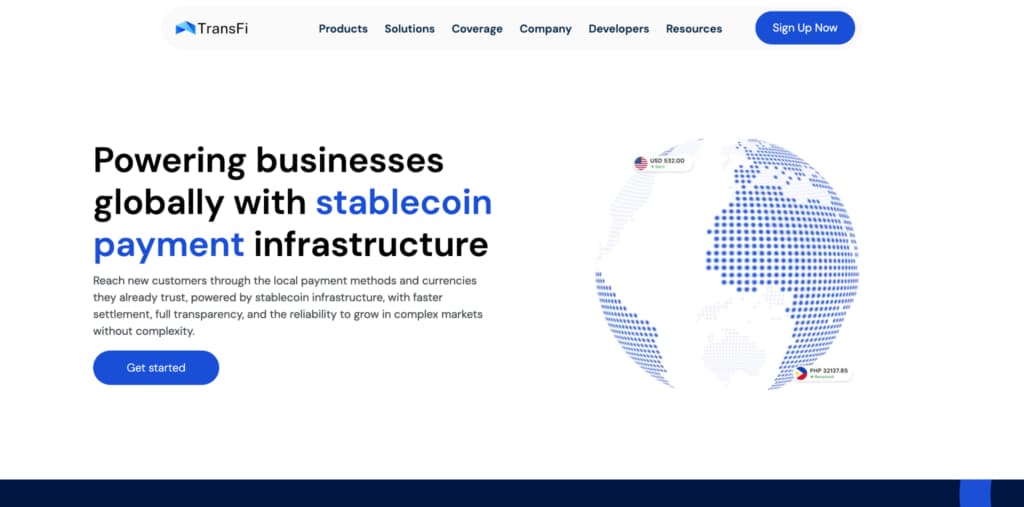
TransFi holds a strong position in the Asia‑Pacific region. The company offers white‑label on‑ramp widgets and a full API. Payment facilitators targeting customers in Southeast Asia, India, or Australia find local payment methods already integrated.
Local Methods Across APAC
A payfac serving Indonesian merchants can offer bank transfers through local providers. Filipino customers pay via GCash or PayMaya. TransFi connects to these rails and converts the fiat to stablecoins. The recipient gets USDC or USDT on Polygon, Solana, or Ethereum.
Supported APAC payment methods:
- UPI (India)
- GCash (Philippines)
- DANA (Indonesia)
- TrueMoney (Thailand)
- Bank transfers in Australia and New Zealand
Fewer Regulatory Licenses
The trade‑off is license coverage. TransFi holds fewer direct regulatory registrations compared to Paybis or Ramp Network. Payment facilitators in highly regulated markets like New York or Germany may face restrictions. The platform works best for payfacs operating in less strict jurisdictions or those willing to hold their own licenses. Onboarding moves fast, sometimes within 48 hours. But the compliance burden sits more on the payfac than with heavily licensed competitors.
3. SimplifyLabs

SimplifyLabs takes an all‑in‑one approach. A payment facilitator gets custody, ramping, and exchange from a single vendor. The company markets itself as a white‑label crypto solution for fintechs and payfacs.
Full Stack in One Contract
Most payfacs piece together three vendors. One for custody. One for on‑ramps. One for exchange. SimplifyLabs provides all three. The payfac signs one agreement. The platform handles stablecoin conversion, stores the crypto, and allows trading between assets. This reduces integration complexity.
Included services:
- Non‑custodial and custodial wallet options
- Fiat on‑ramp (cards and bank transfers)
- Crypto exchange with 50+ pairs
- White‑label mobile SDKs
Smaller Team, Hands‑On Support
SimplifyLabs operates with a smaller team than Stripe or MoonPay. The advantage is direct support. A payfac gets a dedicated integration manager. Questions answered within hours. Custom feature requests considered. The downside is scale. Very large payment facilitators processing millions of dollars daily may stress the platform’s capacity. SimplifyLabs suits mid‑sized payfacs that want a single partner and personal attention over automated self‑service.
4. Stripe

Stripe entered the crypto space through its onramp product. Developers familiar with Stripe’s existing APIs can add crypto purchase features with minimal learning. The onramp lets users buy crypto with credit cards or bank debit cards.
Developer‑Friendly Design
Stripe’s documentation sets the standard. The crypto onramp uses the same patterns as Stripe’s payment APIs. A few lines of code embed a widget. Stripe handles compliance, fraud detection, and payment processing. The user receives crypto directly to their own wallet. The payfac never holds the funds.
Strengths:
- Seamless for existing Stripe users
- Built‑in identity verification
- Global card acceptance
- Strong anti‑fraud systems
Limited Facilitator Model
Stripe does not offer a white‑label facilitator model. A payfac cannot rebrand the onramp as its own product. The widget says “Stripe” throughout the flow. Stripe also lacks off‑ramp capabilities. Converting crypto back to fiat requires a separate solution. The onramp remains US‑centric. International payment methods beyond cards receive less attention. For payfacs that simply need a reliable onramp for their own use and don’t mind Stripe branding, this works. For those wanting a fully white‑labeled facilitator service, Stripe falls short.
5. Ramp Network
Ramp Network focuses on global compliance. The platform holds registrations or licenses in over 150 countries. Payment facilitators with worldwide customers turn to Ramp for coverage.
Deep Integrations with Wallets and DeFi
Ramp connects directly to major crypto wallets like MetaMask, Trust Wallet, and Ledger. A payfac integrating Ramp allows users to buy stablecoins straight into those wallets. The same API powers DeFi apps and gaming platforms. Settlements happen within minutes.
Key features:
- 150+ countries supported
- Multiple fiat currencies (USD, EUR, GBP, BRL, etc.)
- Stablecoin settlement (USDC, USDT, DAI)
- Off‑ramp also available
Higher Transaction Minimums
The main drawback is the minimum transaction amounts. Ramp requires larger purchases compared to competitors. But businesses serving low‑value, high‑volume customers find the limits restrictive. Fees also sit at the higher end of the market. The compliance coverage justifies the cost for regulated payfacs.
6. MoonPay

MoonPay carries high consumer brand recognition. Many crypto users have bought Bitcoin or Ethereum through MoonPay inside their wallet apps. The platform offers an easy widget that any website can embed.
Simple Embed, Strong Brand
A payment facilitator adds a few lines of JavaScript. MoonPay’s widget appears on Payfac’s checkout page. Customers enter their crypto wallet address, pay with a card or bank transfer, and receive stablecoins. MoonPay handles all KYC and transaction monitoring. The payfac earns a revenue share.
Advantages:
- High conversion rates due to brand trust
- Works in over 160 countries
- Multiple payment methods, including Apple Pay and Google Pay
- Strong uptime and reliability
Expensive for White‑Label Facilitators
MoonPay’s model suits payfacs that do not need a fully white‑labeled experience. The widget displays MoonPay branding. Customization options are limited. For a payment facilitator wanting to offer a branded “Crypto Checkout” feature under its own name, MoonPay is not flexible. The pricing also runs high. Per‑transaction fees plus a revenue share cut into the payfac’s margins. MoonPay works best for payfacs, prioritizing speed to market over margin and brand control. For those seeking a true white‑label facilitator model, other platforms offer better economics and customization.
Making the Right Decision
Payment facilitators entering crypto should weigh regulatory readiness, white‑label flexibility, and per‑transaction costs. Each provider excels in one of these areas, so the choice depends on your existing license status and target markets.
Paybis holds multiple registrations and offers a white‑label integration for existing payfacs. TransFi dominates APAC with local payment methods but carries fewer licenses. SimplifyLabs provides a full stack with hands‑on support for mid‑sized payfacs. Stripe delivers developer‑friendly tools but lacks white‑label options. Ramp Network covers 150+ countries with strong compliance but higher minimums. MoonPay brings brand recognition at a premium price.
A payfac already licensed may prioritize low fees and asset flexibility. A payfac with no licenses picks the most regulated partner. A payfac serving Asian customers looks at TransFi. Map the customer base first. Then match the ramp to that region and regulatory reality.